
Back when I ran the Technical Publications group at WEITEK, I sometimes hired technical writers, as one does. Seems like a straightforward task, right? Well, it wasn’t. Not even close.
One of the first guys I interviewed was a technical writer with fifteen years of experience. He’d never written a document. Not one. What?
He’d never even considered writing documents. The concept of technical writers actually writing things struck him as novel, intriguing, and a little disturbing.
Let me explain. In many companies, technical writers aren’t writers at all. They do copyediting, desktop publishing, and review management. The writing is done by people with product expertise: engineers, marketers, or product managers, mostly.
Everyone’s a Tech Writer Now
What’s up with the job title, then?
Originally, “Technical Writer” meant what it said. The technical writer was expected to write the document from scratch, using experts as sources of information, not as uncredited authors.
All that changed in the 1980s. If you were a publications secretary, a technical secretary, or someone who did both desktop publishing and light copyediting, congratulations! You’re a technical writer now!
But the technical writers who actually wrote technical documents didn’t get a title change, so everyone had the same title.
Finding Writers Who Can Write

At WEITEK, the technical writers learned how the product worked and then wrote it up so our customers could understand and use it. We leaned on experts, of course, and on product specifications and other internal documents, but the text was ours. But most of the technical writers I interviewed didn’t know how to do this. Some of them thought they could, but they couldn’t. They were wonderfully plausible in interviews, too!
What to do? A candidate’s portfolio and their tales of what they worked on doesn’t give much insight about who wrote the rough draft. So I thought it over and concluded that all I needed simple test to see if they grasped the rudiments of the craft. At a minimum, this would exclude the no-hopers.
The Test
In the end, I came up with an assignment that a reasonable candidate could dash off adequately in a few minutes:
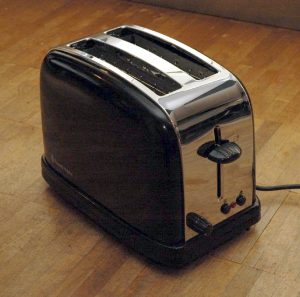
Write step-by-step instructions for making a single slice of toast in a specific toaster of your acquaintance. Assume the toaster is already installed and that the reader is familiar with the concepts of toast and toasters.
You may think that plenty of schoolchildren and random people off the street could glide through this task without any difficulty. You’d be right. But you’d be amazed by how many people fail.
How They Failed
The most common blunder was to write cheerful, salesy, condescending copy that made the author sound like they were talking to children while on drugs. “What a wonderful world it is that has toast in it! And in so many dazzling shades of brown, too!” They usually managed to omit at least one step while they were at it.
Others insisted on writing stuff I hadn’t asked for. Telling me how to unbox and install a toaster when I told you not to doesn’t win you any points. If I wanted time wasted, I’d do it myself.
In theory, lots of people might pass this simple test without being up for the demanding work I had in store for them. Maybe I was lucky, but the people I hired were able to do the work.
The Mindset of Writing Simple Instructions
What I was looking for was something in this ballpark:
-
-
- Put a slice of bread in one of the slots at the top of the toaster.
- Set the browning dial to somewhat less than halfway to the darkest setting if you haven’t discovered your preferred setting yet.
- Push the lever on the side all the way down. It will pop up when the toast is done.
- Remove the slice of toast or, if it is underdone, repeat the process and toast it some more.
-
There’s not much point in adding more detail for readers who are already familiar with the concepts of toast and toasters, which includes almost everyone. I’d have mentioned “one or two slices” or “one to four slices” (depending on the toaster) if I hadn’t specified the problem as being about a single slice of toast.
I personally don’t write instructions as if the reader is implausibly ignorant. Not until the lawyers force me to. I figure that if a reasonably bright and attentive ten-year-old could follow my instructions without much trouble, I’m done. (By the way, it’s worthwhile to put this sort of thing to the test from time to time to see if your instructions are as coherent and actionable to random users as you think.)
Sure, some people grow up in corners of the globe without electricity but gain a reasonable amount of education. At some point they encounter a toaster for the first time. I suspect my instructions would be adequate even for them, though I’d give them some additional thought if they were a larger part of my target audience.
Maintenance, crumb trays, troubleshooting, safety notes, warranty information, installation, and so one don’t belong in the “Making Toast” section and are outside the scope of the exercise, but would appear elsewhere in a real booklet.